English quick take
Use a clean portrait, a soft offset echo, and a clear label. Do not present the result as proof of a haunting, and do not use a stranger's photo without permission.
 GirigoApp.com
AI Studio field note 5 min read
A ghost photo works when the foreground is sharp and the echo is soft. This guide covers the visual technique, the ethical label, and the model workflow.
English quick take
Use a clean portrait, a soft offset echo, and a clear label. Do not present the result as proof of a haunting, and do not use a stranger's photo without permission.
Field note
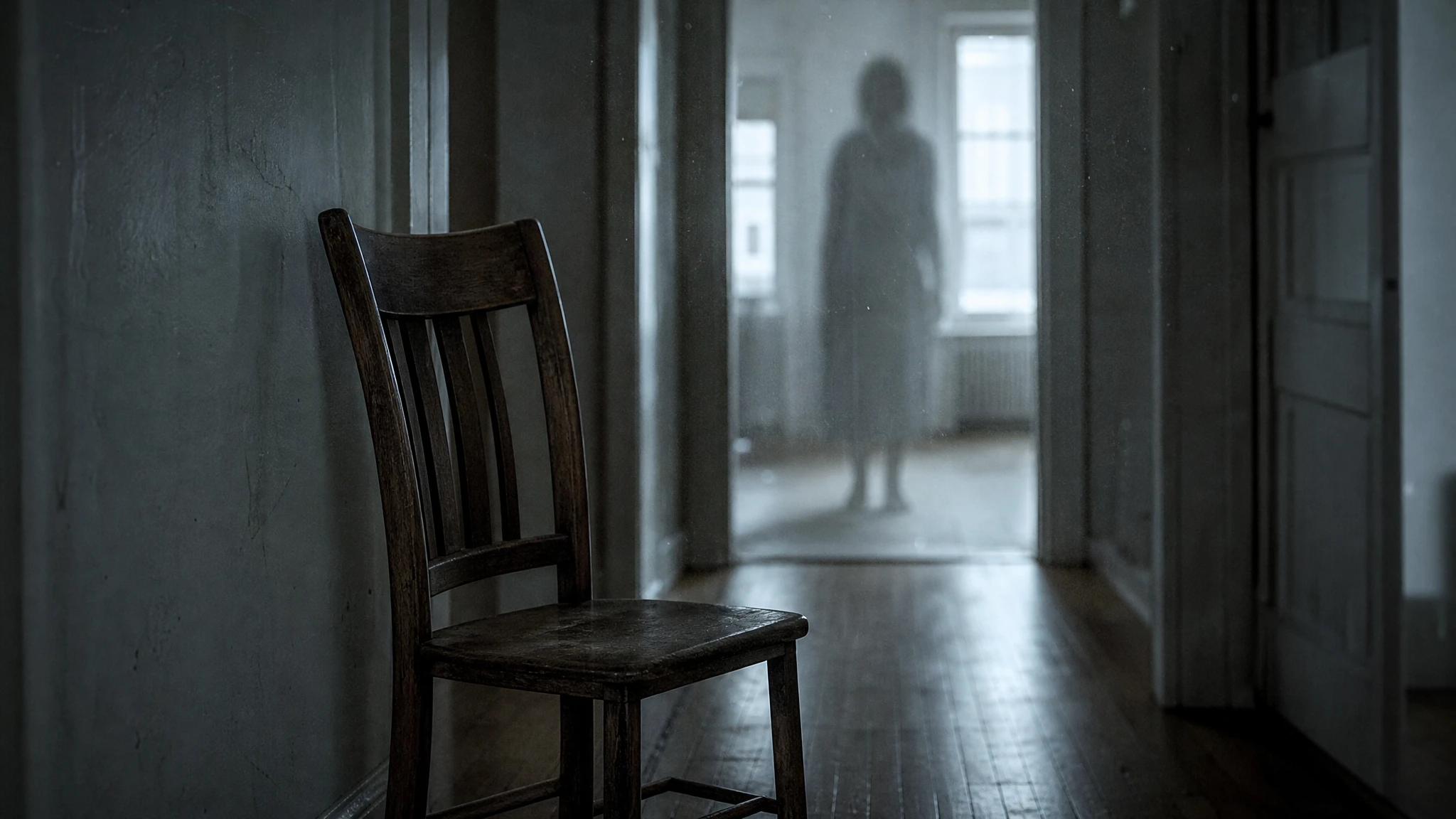
Ghost photography is a composition problem. The viewer needs one sharp foreground subject and one soft, offset echo. The echo should feel like light, dust, or a memory, not a second person. If the echo has a sharp face or a second pair of eyes, the image reads as a duplicate rather than a ghost.
The background matters as much as the effect. A clean wall, a hallway, or a window gives the echo somewhere to sit. A busy background merges with the echo and turns the image into mud.
Field note
Call it art. A composite is not evidence of a haunting, and a page that implies otherwise is spreading misinformation. If you publish the image, label it as an AI-assisted artistic composite. If you use a photo of a deceased person, get the family's permission. If you use a stranger's photo, do not.
This is not a legal footnote; it is part of the design brief. The best ghost images are ambiguous and atmospheric, not fake documentary evidence.
Field note
The Double Exposure recipe preserves the subject's face, skin tone, age, and body proportions, then combines a sharp foreground portrait with a softly offset, semi-transparent echo of the same person. The echo is blurred and desaturated, like a memory. The scene is a dark interior with one window light, fine grain, and a cool blue-gray palette.
The negative constraints are important: no duplicate face, no monster, no extra limbs, no text, no watermark. The goal is one readable face and one soft echo, not two people.
Field note
Replicate is useful for comparing models that handle transparency, blur, and compositing. WaveSpeed is a budget-friendly route for an atmospheric plate. Kie's character routes can help keep the foreground face stable. fal is useful for fast iterations.
If the model turns the echo into a second clear face, reduce the echo's opacity or change the model. Do not add more ghost words; the problem is the visual structure, not the vocabulary.
Field note
The local image lab can create a simple ghost-echo preview from one photo. It draws the image, adds a blurred offset copy, applies a cold grade, and lets you adjust the vignette and grain. That is not a full compositing engine, but it is enough to test the composition before you generate.
Use the preview to decide where the echo should sit and how strong it should be. Then translate that decision into the prompt: offset, blur, opacity, and light. The model has a better chance when you describe the relationship between the two layers.
Field note
Keep the source photo, the generated image, and the final graded image separate. Add a caption that says the image is an AI-assisted composite. If you use the image on a page about a real place or a real person, make sure the page does not imply that the composite is documentary evidence.
The studio page is built as an art tool, not a paranormal evidence generator. That distinction is the difference between a creative project and misinformation.
Embedded studio
Open the studio
This is art, not evidence. The local editor gives you a free ghost-echo preview; the prompts help an image model build a cleaner plate. Never present the result as a real paranormal photograph.
Use the uploaded portrait as the identity reference. Create an artistic double-exposure ghost portrait. Preserve the subject's recognizable face, skin tone, age, and body proportions. Combine a sharp foreground portrait with a softly offset, semi-transparent echo of the same person. The echo should be blurred and desaturated, like a memory, not a second person. Use a dark interior with a single window light, fine film grain, and a cool blue-gray palette. Keep one person only. Do not create a duplicate face, a monster, extra limbs, readable text, or a watermark.
Model routing
| Provider | Best for | Typical route | Docs |
|---|---|---|---|
| ReplicateExperiment-first | Broad catalogue for experiments and batch comparisons | Community and first-party image/video models | Docs |
| WaveSpeedBudget-first | Low-cost image edits and image-to-video drafts | Seedream edit, FLUX Kontext, Wan image-to-video | Docs |
| KieCharacter-first | Nano Banana image edits and Kling video routes | Nano Banana, Kling video | Docs |
| SeeAPIRouting layer | One API surface for several model families and fallback routes | Image and video inference endpoints | Docs |
| falSpeed-first | Fast hosted queues and strong model coverage | FLUX, Kling, and other hosted media models | Docs |
FAQ
No. It creates an artistic composite. The result is not evidence of anything supernatural, and the page labels it that way.
Yes. The local editor can create a simple double-exposure-style echo from one image. Use the AI prompts for a more elaborate scene.
Keep the echo blurred, offset, and partially transparent. Do not give the echo a sharp expression or a second pair of eyes.
No. Use a photo you own or have explicit permission to edit, and do not imply that a real person is haunted.
Checked sources