English quick take
Show the paws, name the breed and markings, keep the costume to one plane, and inspect eyes, ears, paws, and tail before you judge the costume.
 GirigoApp.com
AI Studio field note 6 min read
Pets are a harder image-edit problem than people. This guide shows how to keep the animal recognizable and catch the anatomy failures that make a cute costume unusable.
English quick take
Show the paws, name the breed and markings, keep the costume to one plane, and inspect eyes, ears, paws, and tail before you judge the costume.
Field note
A model has seen millions of dog photos and millions of pumpkin photos, but far fewer photos of a dog wearing a pumpkin costume. When it combines the two, it has to invent the boundary between fur, fabric, and limbs. That is where extra legs, a second tail, or a human hand appears. The model is not being careless; it is filling a gap in its visual knowledge.
The fix is to reduce the number of gaps. Show the pet's paws in the reference. Keep the pose simple. Describe one costume plane instead of a full-body suit with multiple accessories. Name the species and the visible anatomy. The more the reference already contains, the less the model has to invent.
Field note
Use a photo where the pet is standing or sitting with the paws visible. The face should be sharp, the eyes should be open, and the fur markings should be clear. Avoid a photo where the pet is already wearing a busy outfit; the model will merge the old and new costumes. Avoid a photo where the pet is lying down and the legs are hidden, unless you want the model to invent them.
If you only have a close-up face photo, keep the costume to a collar, a hood, or a small hat. Do not ask for a full-body pumpkin suit. The composition will force the model to invent a body, and invented bodies are where the anatomy errors start.
Field note
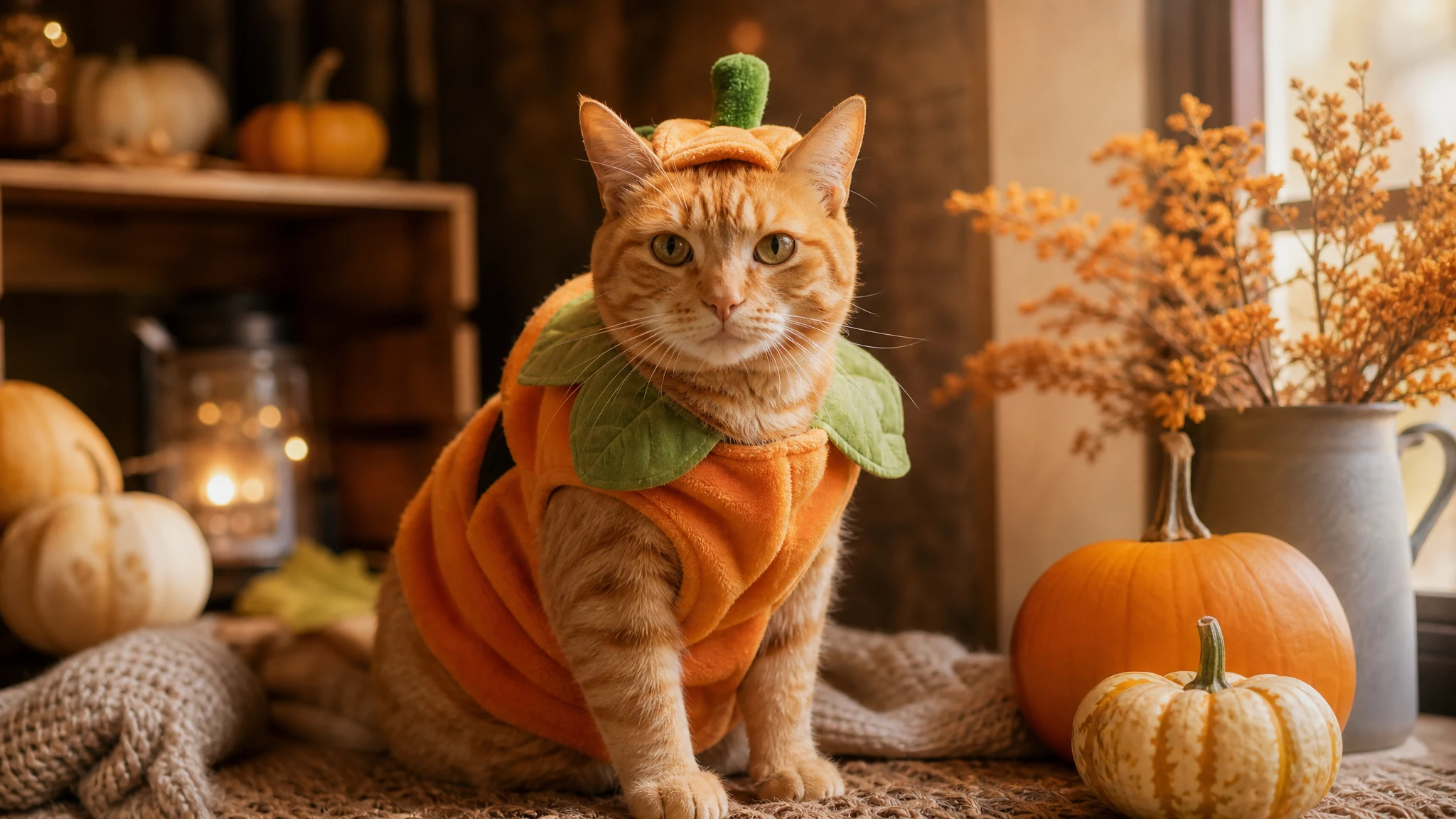
The Pumpkin Pet recipe starts with the uploaded pet photo and preserves breed, fur color, distinctive markings, eye color, facial appearance, and natural anatomy. It then adds a soft pumpkin-inspired costume with a small green leaf accessory. The costume is described as fitted and natural, not as a full mascot suit. The scene is a warm autumn studio with miniature pumpkins.
The negative constraints are specific: no extra animals, no unnatural paws, no duplicated limbs, no text, no watermarks. Those are the failures the recipe is designed to catch. If the model still adds a limb, reduce the costume complexity or change the model; do not add ten more negative words.
Field note
A low-cost image-edit route on WaveSpeed is a sensible first test for fur and fabric. fal is useful when you want a fast queue for several poses. Kie's character routes can help when the pet's face is the most important part of the image. Replicate is useful for comparing several model families with the same prompt.
Do not judge a pet model on one image. Generate two or three low-cost tests with the same reference and prompt, then compare the paws and eyes. If the anatomy fails consistently, the model or the reference is the problem, not the costume description.
Field note
First, count the legs and paws. Second, check the tail; it should connect to the body, not float. Third, check the eyes and ears; the costume should not cover the eyes or merge with the ears. Fourth, check the mouth and nose; a costume that covers the muzzle is a safety problem in real life and a visual problem in the image.
If the costume is cute but the anatomy is wrong, the image is not usable. Fix the anatomy first. A simpler costume on a correct animal is better than an elaborate costume on a broken one.
Field note
Use the local editor to test the crop, warmth, and caption before you generate. A square crop is good for a profile; a 4:5 crop is good for a feed post. Generate one low-cost image, inspect the anatomy, and only then decide whether to upscale. Keep the source photo and the generated image separate so you can compare them.
Do not claim that a real pet wore a costume that only exists in the image. If you use the image for a product or a shelter post, disclose that it is AI-assisted and make sure the costume would be safe and comfortable in real life. The studio page is a design tool, not a veterinary recommendation.
Embedded studio
Open the studio
Pet prompts fail when they change the species or hide the paws. These recipes lock the animal first, then add a costume and a set, and they tell the model exactly which anatomy errors to avoid.
Use the uploaded pet photo as the primary reference. Preserve the animal's original breed, fur color, distinctive markings, eye color, facial appearance, and natural anatomy. Dress the pet in a soft pumpkin-inspired Halloween costume with a small green leaf accessory. Keep the costume fitted naturally without covering the animal's eyes or changing its species. Place the pet in a cozy autumn photography studio with warm lighting and miniature pumpkins. Create a photorealistic professional pet portrait with realistic fur texture and natural shadows. Avoid extra animals, unnatural paws, duplicated limbs, text, and watermarks.
Model routing
| Provider | Best for | Typical route | Docs |
|---|---|---|---|
| WaveSpeedBudget-first | Low-cost image edits and image-to-video drafts | Seedream edit, FLUX Kontext, Wan image-to-video | Docs |
| falSpeed-first | Fast hosted queues and strong model coverage | FLUX, Kling, and other hosted media models | Docs |
| KieCharacter-first | Nano Banana image edits and Kling video routes | Nano Banana, Kling video | Docs |
| SeeAPIRouting layer | One API surface for several model families and fallback routes | Image and video inference endpoints | Docs |
| ReplicateExperiment-first | Broad catalogue for experiments and batch comparisons | Community and first-party image/video models | Docs |
FAQ
Yes, but name the species and visible anatomy. Cats and dogs have different ears, muzzles, and paws, so a generic pet prompt can produce a hybrid.
The model is filling in an unfamiliar costume shape. Show the paws, keep the pose simple, repeat the anatomy constraints, and change the model if the problem persists.
Only with rights to the source photo, a model license that permits the use, and a clear AI disclosure. Do not imply a real pet wore a real product without evidence.
A low-cost edit route on WaveSpeed is a sensible first test. Move to a stronger model only after the pose and costume shape are right.
Checked sources